
M&A Market Report: Restoration and Remediation in 2026, Insurance-Backed Demand Meets Consolidation
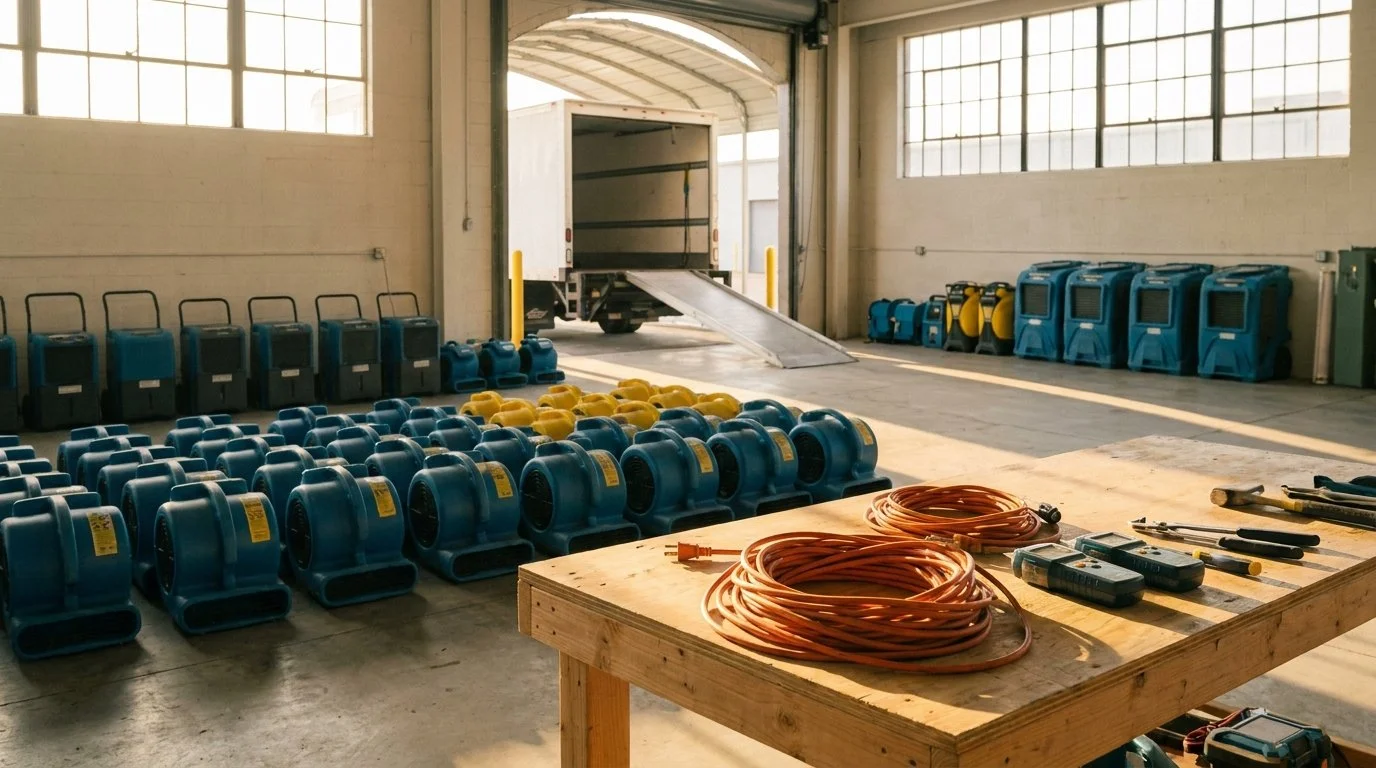
Restoration M&A Market Report 2026: Insurance-Backed Demand Meets Consolidation
Restoration and remediation sits at the intersection of two things buyers love: non-discretionary demand and insurance-backed payment. Water, fire, and mold events do not follow the economic cycle, and national platforms are consolidating the space aggressively.
Here is what the 2026 market looks like for independent and franchise restoration owners.
Why Restoration Is in Demand
Event-driven, recession-resistant demand. Pipes burst and storms hit regardless of interest rates.
Insurance-backed payment. Carriers fund the majority of jobs, which reduces bad-debt risk relative to consumer-paid trades.
TPA program revenue. Carrier and third-party administrator programs deliver predictable job flow to approved contractors.
Fragmentation with franchise overlay. Thousands of independents and franchisees create both tuck-in supply and re-sale liquidity.
Climate tailwind. Weather-related claims frequency keeps rising, expanding the addressable market.
Who Is Buying in 2026
National restoration platforms. PE-backed consolidators building carrier-program density across regions, targeting companies with $1M+ EBITDA and strong TPA standing.
Franchise re-sales. Established franchise territories trade actively, with franchisor approval as a process step.
Diversified facility services buyers. Adding restoration for its counter-cyclicality alongside cleaning, security, and maintenance lines.
What Buyers Are Paying
| Company Profile | Typical EBITDA Multiple |
|---|---|
| Small independent, owner-run, referral-dependent | 3x to 4x |
| Franchise territory with solid volume | 3.5x to 5x |
| Independent with TPA programs and commercial accounts | 4.5x to 6x |
| Mitigation-led with strong margins and estimator bench | 5.5x to 7x |
| Platform-ready (scale, multi-market, management depth) | 6.5x to 8x |
Source: Restoration industry transaction data and announced platform acquisitions
The Valuation Drivers That Matter Most
1. Mitigation vs. reconstruction mix. Mitigation (water extraction, drying, emergency response) carries higher margins and faster payment than reconstruction. Mitigation-led companies earn premiums.
2. TPA and carrier relationships. Program standing delivers job flow a buyer inherits, but concentration in one program draws structure. Diversified referral sources price best.
3. Receivables quality. Insurance receivables age differently than consumer receivables. A clean, current AR book is a major diligence asset.
4. Estimator and PM bench. Xactimate-fluent estimators are the scarce talent in restoration. Bench depth beyond the owner drives the multiple.
5. Owner's adjuster relationships. If job flow depends on the owner's personal carrier relationships, expect a longer transition and more earnout.
How Deals Are Structured
Expect 65% to 75% cash at close, with earnouts tied to carrier program retention and revenue sustainability over 12 to 24 months. Equipment and fleet treatment in working capital is a recurring negotiation point, so agree the mechanism early. Our guides on selling to private equity and preparing for due diligence cover what to expect.
Preparing for a 2026 Exit
Document job files rigorously. Complete moisture logs, photos, and sign-offs are underwriting evidence.
Clean up receivables. Chase aged insurance AR before going to market, not during diligence.
Diversify referral sources. Add plumber, property manager, and agent channels alongside TPA programs.
Reduce owner dependency on carrier relationships. Introduce your team to program contacts well before a sale.
When you are ready, start with our guide to maximizing a home services exit or visit our Facility Services M&A practice page to sell your restoration business with advisors who know how buyers underwrite the space.
Key Takeaways
Restoration combines recession resistance with insurance-backed payment, a profile buyers actively hunt.
Mitigation-led companies earn premiums over reconstruction-heavy peers.
Multiples range from 3x to 8x EBITDA depending on mix, program standing, and bench depth.
Earnouts tied to program retention are standard.
Job file documentation and clean AR are your best diligence assets.
FAQ
What is a restoration company worth in 2026?
Most trade between 4x and 6x EBITDA. Mitigation-led and platform-ready companies can reach 6.5x to 8x.
Do TPA programs help or hurt my valuation?
They help by delivering predictable job flow, but heavy concentration in one program draws earnout structure. Diversification prices best.
Can I sell a franchise restoration business?
Yes. Franchise territories trade actively, though franchisor consent and transfer terms become part of the process.
How do buyers treat my equipment and fleet?
Usually included in the deal, with treatment negotiated in working capital. Get an equipment list and maintenance records ready early.
Is reconstruction revenue bad?
No, but it is lower margin and slower to collect than mitigation. Buyers pay for a healthy mitigation-led mix.