
M&A Market Report: Commercial Cleaning and Janitorial in 2026, Recurring Revenue Buyers Love
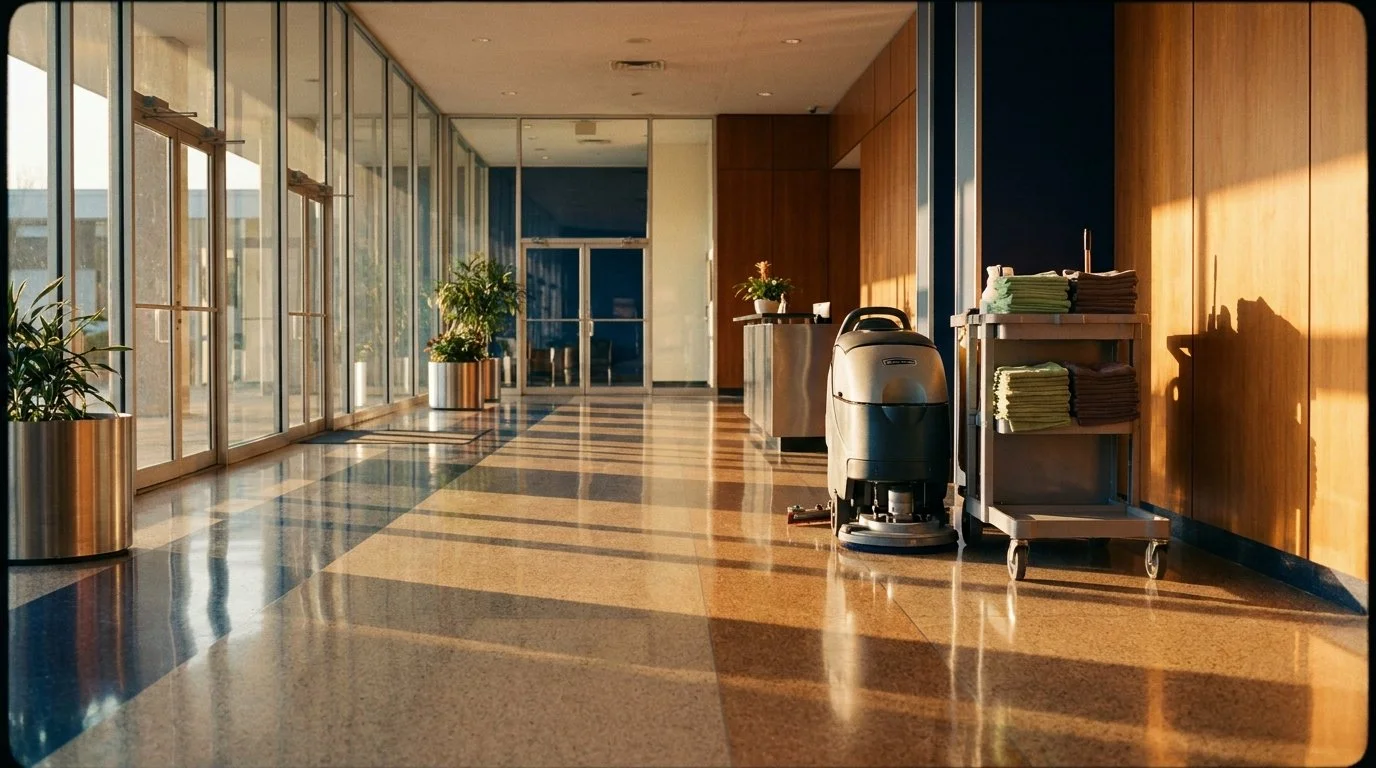
Commercial Cleaning M&A Market Report 2026: The Recurring Revenue Buyers Love
Janitorial is not glamorous, and that is precisely why buyers love it. Contracted, recurring, essential revenue with low capital intensity is the profile facility services investors underwrite best. In 2026, commercial cleaning companies with real contract books are receiving serious institutional attention.
This report covers the market, the buyers, and what separates a 3x exit from a 6x one.
Why Commercial Cleaning Is in Demand
Contracted recurring revenue. Monthly janitorial contracts are as close to subscription revenue as the physical economy gets.
Essential service. Offices, medical facilities, schools, and industrial sites cannot skip cleaning, whatever the economy does.
Fragmentation. Tens of thousands of independent operators create a long consolidation runway.
Cross-sell logic. Facility services platforms add cleaning to security, landscaping, and maintenance offerings to deepen client relationships.
Specialty premiums. Medical, cleanroom, and industrial cleaning carry compliance requirements that create pricing power.
Who Is Buying in 2026
Facility services platforms. PE-backed integrated facility management groups are the most active acquirers, targeting $500K+ EBITDA companies with commercial contract bases.
Regional janitorial strategics. Larger cleaning companies buying route density and specialty capabilities.
Franchise systems and master franchisees. Active in the small-commercial segment.
Individual buyers. Common below $500K EBITDA, drawn by the recurring revenue model.
What Buyers Are Paying
The Valuation Drivers That Matter Most
Contract quality. Written agreements with auto-renewal and reasonable termination clauses trade at a premium to handshake arrangements, even with identical revenue.
Client concentration. One client above 20% to 25% of revenue draws structure. A diversified book of mid-size contracts is the ideal profile.
Churn history. Three years of documented client retention is one of the most persuasive exhibits in a cleaning company sale.
Labor model and compliance. Wage compliance, workers' comp history, and supervisor depth are early diligence items. E-verify and clean audits reduce buyer risk pricing.
Specialty capabilities. Medical and industrial certifications create margin and defensibility that generalist janitorial lacks.
How Deals Are Structured
Expect 70% to 80% cash at close, with holdbacks or earnouts tied to contract retention over the first 12 months, the standard mechanism for the client-transfer risk inherent in service businesses. Our cleaning company exit guide walks through the process step by step.
Preparing for a 2026 Exit
Paper your contracts. Convert informal arrangements to written agreements before going to market.
Track retention. Build the churn report buyers will ask for.
Deepen the supervisor bench. Buyers need the accounts to survive your departure.
Diversify the book. Reduce any single client below 20% of revenue where possible.
When you are ready to explore a sale, visit our Facility Services M&A practice page to sell your cleaning business with advisors who know how these companies are underwritten.
Key Takeaways
Contracted janitorial revenue is a premium asset class in 2026 facility services M&A.
Contract quality and churn history drive the multiple more than headline revenue.
Multiples range from 2.5x to 7x+ EBITDA, with specialty cleaning at the top.
Retention-based earnouts are standard; strong contracts shrink them.
Paperwork is profit. Written agreements and clean compliance records directly increase price.
FAQ
What is a commercial cleaning company worth in 2026?
Most trade between 3x and 5.5x EBITDA. Specialty and platform-ready companies can reach 6x to 7x or more.
Do month-to-month clients hurt my valuation?
Long relationships without contracts still have value, but written agreements consistently price 1 turn or more higher.
How do buyers treat client concentration?
Above roughly 20% to 25% in one client, expect an earnout or holdback tied to that account's retention.
Is residential cleaning valued the same as commercial?
No. Commercial contract revenue is valued higher. Residential route businesses sell, but to a different buyer pool at lower multiples.
How long does a sale take?
Typically 6 to 9 months, plus a 12-month retention or earnout period after close.