
Ophthalmology and ASC Sales: Premiums from Multi-Location Platforms
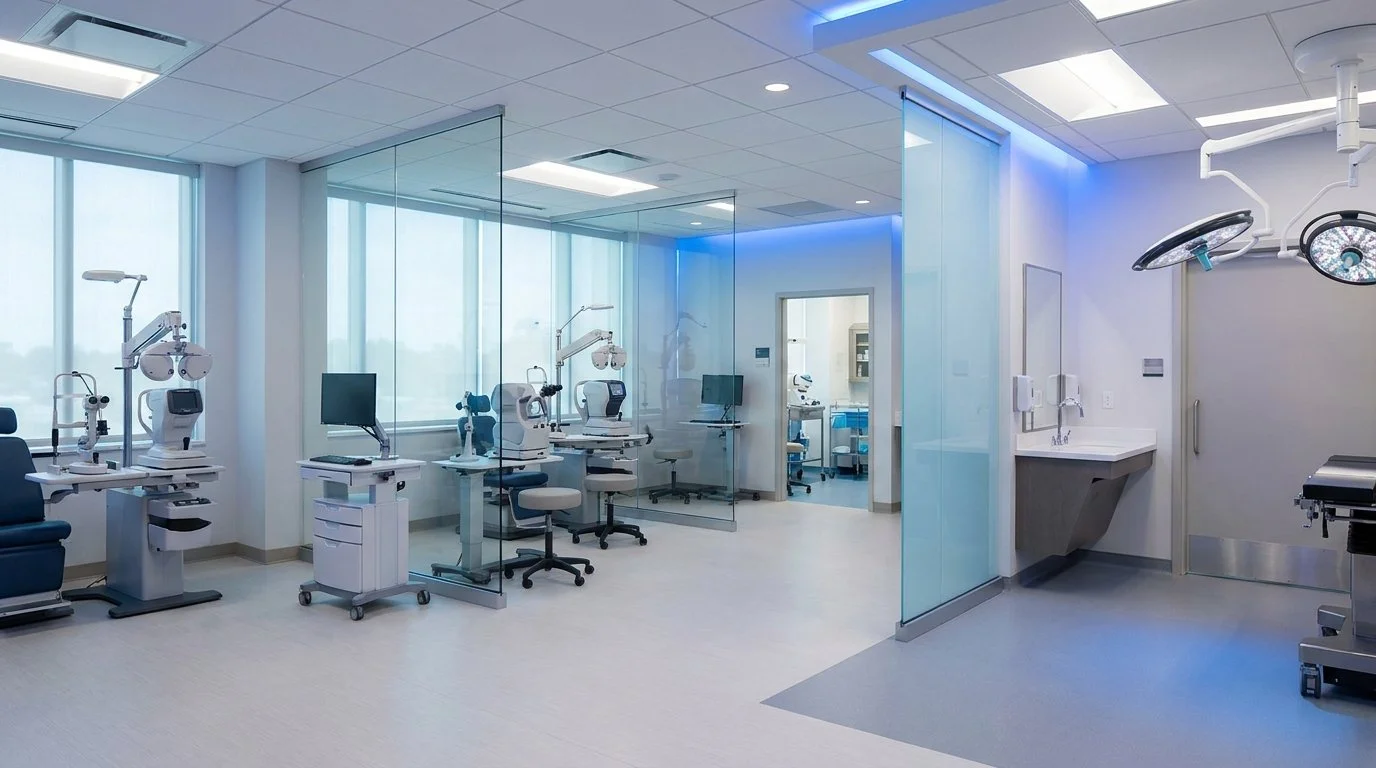
Ophthalmology has emerged as one of the most actively consolidated specialties in healthcare. Private equity platforms have spent years acquiring practices and ambulatory surgery centers (ASCs), building regional and national networks that deliver eye care at scale.
For practice owners in the $2M–$20M revenue range, this creates exceptional exit opportunities, but also complexity. Multi-location platforms command significant premiums over single-site practices, and ASC ownership can dramatically impact valuation.
This guide explains what is driving ophthalmology M&A, how ASCs affect valuations, and what owners need to know about selling in 2026.
Why Ophthalmology Is a Hot M&A Sector
Ophthalmology combines several characteristics that make it attractive to buyers:
Demographic tailwinds. Age-related eye conditions, cataracts, glaucoma, macular degeneration, increase with age. As the population ages, demand for ophthalmology services grows predictably.
High-margin procedures. Cataract surgery, LASIK, and premium lens implants generate strong margins, particularly when performed in practice-owned ASCs.
Recurring revenue. Many eye conditions require ongoing management, creating predictable patient relationships and revenue.
Fragmentation. Most ophthalmology practices are independently owned, giving consolidators a long runway to acquire and build scale.
ASC arbitrage. Practices that own ASCs capture facility fees that would otherwise go to hospitals, dramatically improving economics.
Current Multiples for Ophthalmology Practices
Valuations depend heavily on scale, subspecialty mix, and ASC ownership:
| Practice Profile | Typical EBITDA Multiple |
|---|---|
| Solo practice, no ASC | 4x to 6x |
| Group practice (2 to 4 MDs), no ASC | 5x to 7x |
| Group practice with ASC ownership | 7x to 10x |
| Multi-location platform with ASC(s) | 9x to 13x |
| Retina subspecialty (standalone) | 8x to 12x |
The range is wide because ASC ownership and subspecialty mix have outsized impact on valuations.
The ASC Premium: Why It Matters
Ambulatory surgery centers are the key differentiator in ophthalmology valuations. Here is why:
Facility fee capture. When cataract surgery is performed in a hospital, the hospital collects the facility fee, often $2,000-$4,000 per case. When performed in a practice-owned ASC, the practice captures that revenue.
Margin improvement. ASC-based surgery typically generates 40–60% margins, compared to 15–25% for clinic-only practices.
Strategic value. Buyers want ASC access to improve economics across their portfolio. Practices with ASC ownership or capacity are significantly more valuable.
Example impact:
A practice performing 500 cataract surgeries annually at a hospital generates minimal facility revenue. The same practice with an owned ASC might generate $1.5M-$2M in additional annual revenue at high margins.
This explains why ASC-owning practices command 2-4 additional multiple turns over comparable practices without ASCs.
What Drives Multi-Location Platform Premiums?
Platform buyers are looking for practices that can serve as foundations for regional expansion. Multi-location practices command premiums for several reasons:
1. Geographic coverage. Multiple locations provide market presence and patient convenience. Buyers can leverage existing infrastructure for growth.
2. Provider depth. Multi-location practices typically have multiple physicians, reducing key-person risk and improving transferability.
3. Operational scale. Centralized billing, marketing, and management across locations improves efficiency and demonstrates operational maturity.
4. De novo potential. Practices with proven expansion playbooks can guide platform growth into new markets.
5. ASC capacity. Multi-location practices often have or can justify ASC development, unlocking margin improvement.
Subspecialty Considerations
Within ophthalmology, different subspecialties trade at different multiples:
Retina: The highest-value subspecialty, commanding 8x-12x EBITDA. Retina specialists treat serious conditions (AMD, diabetic retinopathy) with expensive injectable medications that generate significant revenue. Limited fellowship training creates supply constraints.
Cataract/comprehensive: The core of most ophthalmology practices. Valuations depend heavily on volume and ASC access.
Glaucoma: Growing importance as the population ages. MIGS (minimally invasive glaucoma surgery) adds procedural revenue.
Cornea: Specialized but smaller market. Practices with cornea expertise add differentiation.
Oculoplastics: Combines medical and aesthetic services. Practices with strong cosmetic revenue may command premiums.
How to Position Your Practice for Maximum Value
1. Optimize ASC Economics
If you own an ASC or have ownership interest, maximize utilization. If you do not have ASC access, explore development or partnership opportunities. ASC ownership is the single largest valuation lever in ophthalmology.
2. Build Provider Depth
Multi-physician practices command higher multiples. If you are a solo practitioner, consider adding associates before selling. Buyers want to acquire teams, not individuals.
3. Diversify Subspecialties
Practices with retina, glaucoma, or oculoplastics capabilities attract broader buyer interest and command premiums.
4. Expand Geographically
Multi-location practices trade at significant premiums. If you have capacity and capital, opening satellite locations before sale can meaningfully improve valuation.
5. Reduce Owner Dependency
Share patient relationships. Build call coverage. Train associates to handle complex cases. Buyers discount practices where the owner is irreplaceable.
6. Document Operations
Create SOPs for clinical workflows, surgical protocols, billing, and compliance. Operational maturity signals reduced integration risk.
Timing the Ophthalmology Market in 2026
2026 presents a mixed but generally favorable market:
Positives:
Major platforms (EyeCare Partners, US Eye, Retina Consultants of America) remain acquisitive
PE capital allocated to ophthalmology remains substantial
Demographics continue to drive volume growth
Interest rates are stabilizing, improving financing conditions
Considerations:
Roll-up maturation in some markets may compress tuck-in multiples
Platform deals are increasingly rare as consolidation progresses
Competition for retina practices has intensified
For practices with ASC ownership, strong volume, and multi-location presence, 2026 offers attractive exit conditions. Smaller practices without ASCs may face a more competitive buyer market.
Deal Structure Considerations
Ophthalmology transactions often involve complex structures:
Practice vs. ASC valuation. Practice and ASC may be valued and sold separately, or combined. Structure affects tax treatment and buyer interest.
Real estate treatment. If you own clinic or ASC real estate, it may be sold, leased, or retained. Each approach has different economic implications.
Employment vs. equity. Post-sale, you may be an employee, equity partner, or both. Platform deals often include equity rollover with potential second exit.
Earn-outs. Volume-based or EBITDA-based earn-outs are common, particularly for high-producing physicians.
An experienced M&A advisor can help navigate these complexities and optimize deal structure for your goals.
FAQs
Why is ASC ownership so important to ophthalmology valuations?
ASCs capture facility fees ($2,000-$4,000 per cataract surgery) that would otherwise go to hospitals. This dramatically improves practice economics. Practices with ASC ownership generate higher margins and command 2-4 additional multiple turns.
Can I sell my ophthalmology practice without an ASC?
Yes, but valuations will be lower (4x-7x vs. 7x-13x for ASC-owning practices). Buyers may still be interested, particularly if your market has ASC development potential.
How are retina practices valued differently?
Retina commands premium multiples (8x-12x) due to high-revenue injectable medications, limited specialist supply, and serious medical conditions that require ongoing treatment. Retina practices are among the most sought-after assets in ophthalmology.
What transition period should I expect?
Most ophthalmology deals require 2-3 years of post-sale employment, particularly for high-producing surgeons. Practices with strong associate teams may negotiate shorter transitions.
Should I develop an ASC before selling?
Possibly. ASC development takes 18-24 months and requires capital and expertise. If you have time and resources, ASC ownership can significantly increase valuation. Alternatively, buyers may develop ASCs post-acquisition, but you will not capture that premium.
Recommended Reading
Business Valuation Explained. Understand how buyers calculate EBITDA and apply multiples.
Should You Sell Your Business to Private Equity?. Learn how PE platforms work and what to expect.
Private Equity Rollovers: How to Sell Your Company Twice. Understand equity rollover structures common in ophthalmology deals.
Key Takeaways
ASC ownership is the single most important valuation driver in ophthalmology, adding 2 to 4 multiple turns.
Multi-location platforms command 9x to 13x EBITDA while solo practices without ASCs trade at 4x to 6x.
Retina subspecialty practices command premium multiples of 8x to 12x due to high revenue per patient and limited supply.
Provider depth and subspecialty diversification reduce key-person risk and attract broader buyer interest.
Roll-up activity continues in 2026 but platform deals are becoming rarer as consolidation progresses.
Start preparation 12 to 24 months before your target exit, particularly if ASC development or provider recruitment is needed.